
How to Grow a Founder Persona on X: A Practical Founder Growth System
Founder growth on X works when a founder becomes easier to trust, not just easier to notice. Here’s how to build a founder persona around expertise, distribution, useful commentary, and real market relationships.
Founder growth is usually framed as personal branding.
That framing is too shallow.
For solo founders, startup leaders, B2B teams, and crypto brand builders, a visible founder persona can become part of the company’s trust layer. It helps people understand what the company believes, why it exists, who is building it, and why the market should care.
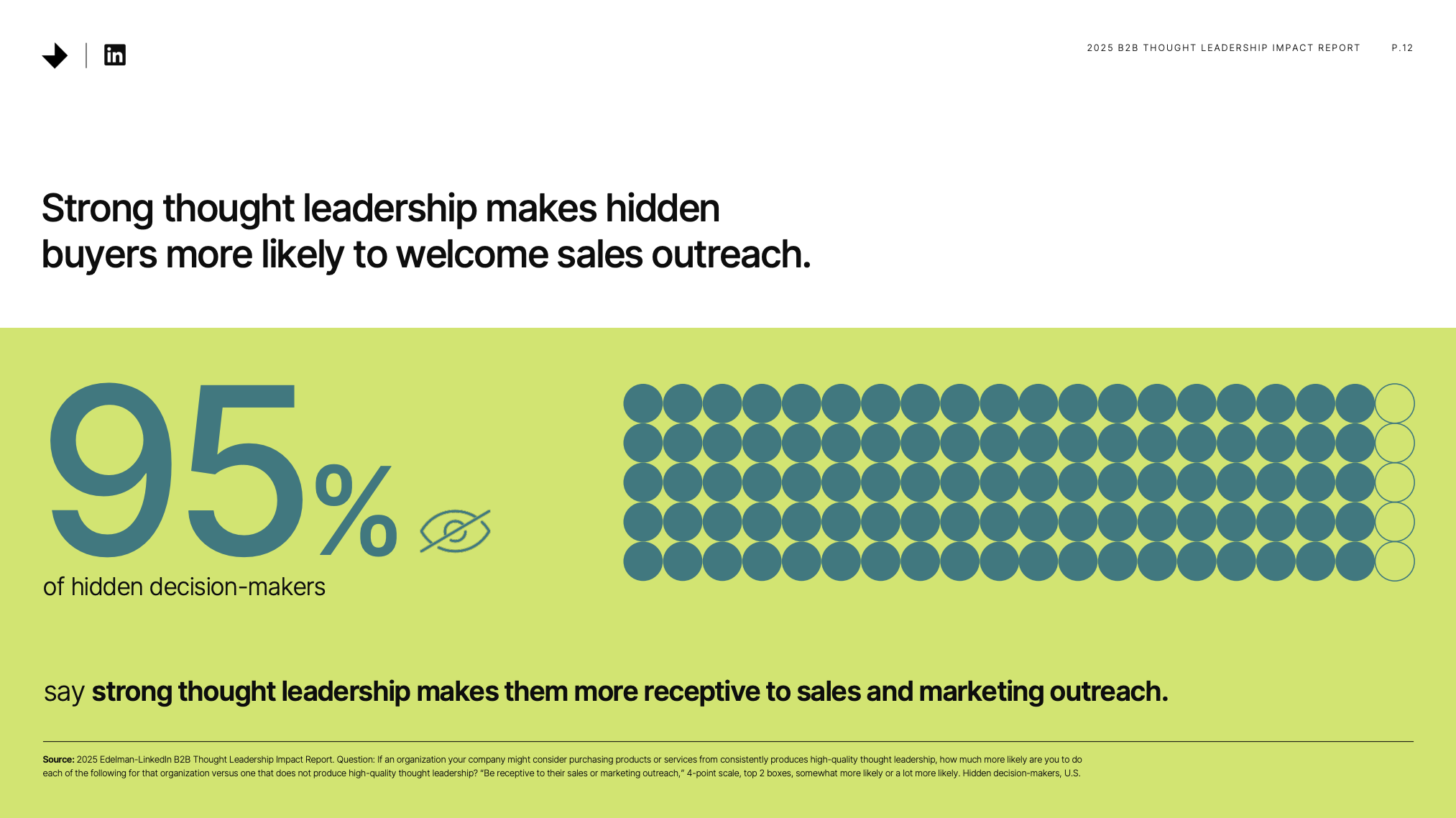
This matters because buying journeys are less linear than most teams want them to be. In B2B, decisions are often shaped by visible buyers, hidden influencers, internal champions, technical evaluators, and executives. Edelman and LinkedIn’s 2025 B2B Thought Leadership Impact Report found that thought leadership can influence “hidden buyers” who are not always in the formal sales process, but still shape vendor perception and internal consensus.
For startups, the same logic applies. People rarely trust an early-stage company because the logo is already famous. They trust the people behind it, the clarity of their thinking, and the consistency of their public presence.
What is founder growth?
Founder growth is the process of turning a founder’s public presence into a credible distribution asset for the company.
A strong founder account helps the market understand the founder’s expertise, the company’s point of view, the product’s category, and the problems the team is trying to solve.
For Web3 teams, founder growth is especially relevant because X remains one of the main places where crypto narratives, product debates, investor opinions, KOL conversations, and community sentiment form in public.
A founder persona works when it creates primary signal: original thinking, useful context, and visible judgment from the person building the company.
 Stacy Muur
Why founder personas are becoming a growth channel
Founder personas are becoming more important because generic brand communication is losing trust.
Edelman’s 2025 Trust Barometer shows a difficult environment for institutional trust. Business remains comparatively trusted, but leaders still face skepticism. Axios’ summary of the report notes that 7 in 10 people believe leaders such as CEOs, government officials, and journalists deliberately mislead them.
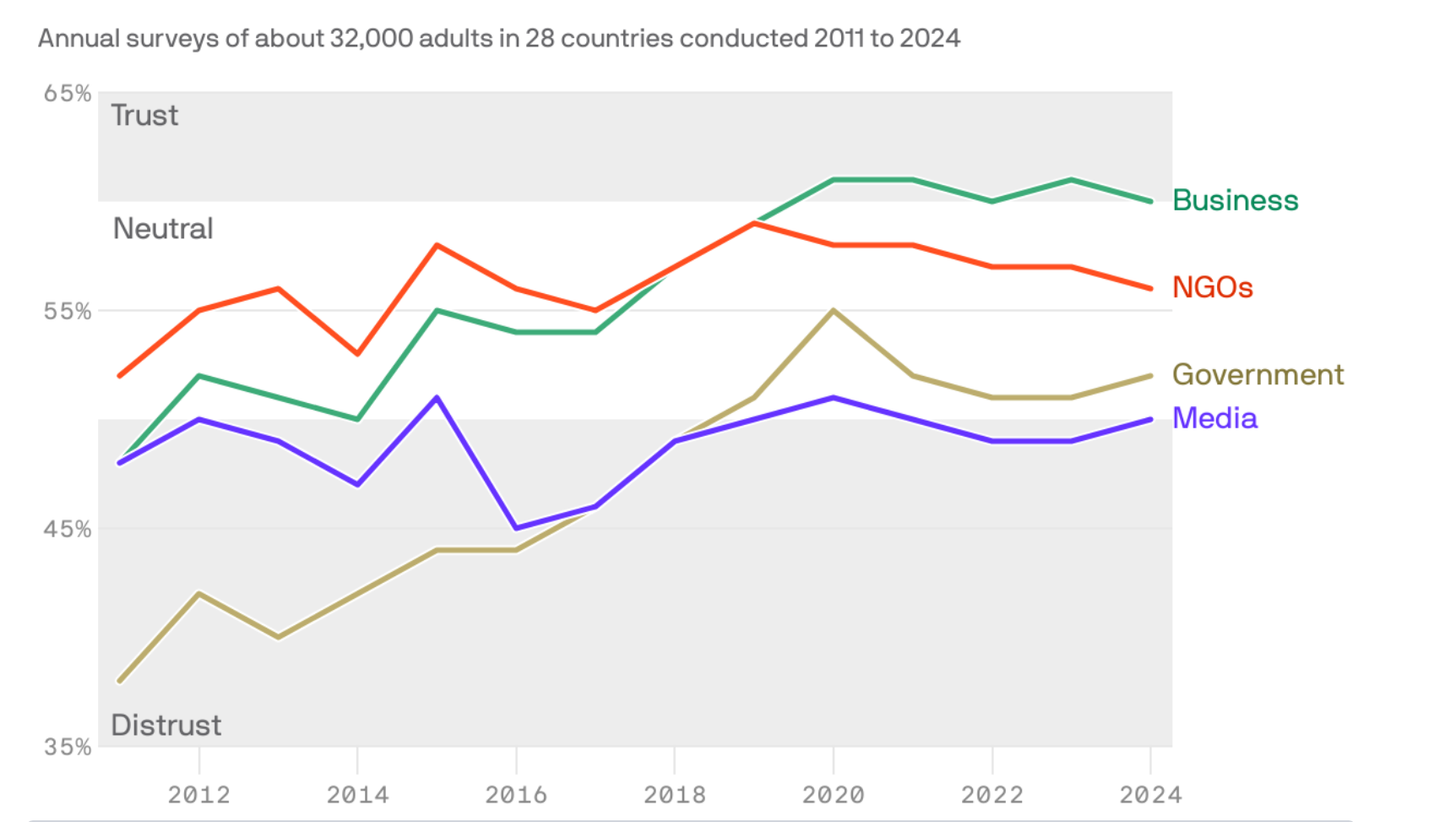
This means the bar is higher. Founder visibility only helps when it feels earned. A founder account should show the person’s actual expertise, decision-making logic, market observations, and useful opinions.
For B2B companies, this connects directly to demand generation. The 2024 Edelman–LinkedIn B2B Thought Leadership Impact Report surveyed nearly 3,500 management-level professionals and focused on how high-quality thought leadership affects buyer behavior beyond simple awareness.
For startups raising capital, social presence can also reduce information gaps. A Springer study on social media and VC financing found evidence that startup social media engagement affects VC financing structure, syndication, and exit probability.
This is especially relevant for crypto. CoinGecko’s 2026 crypto community media usage report found that X, Telegram, and YouTube represented 84% of crypto community responses for where people spend most of their crypto-related social media time.
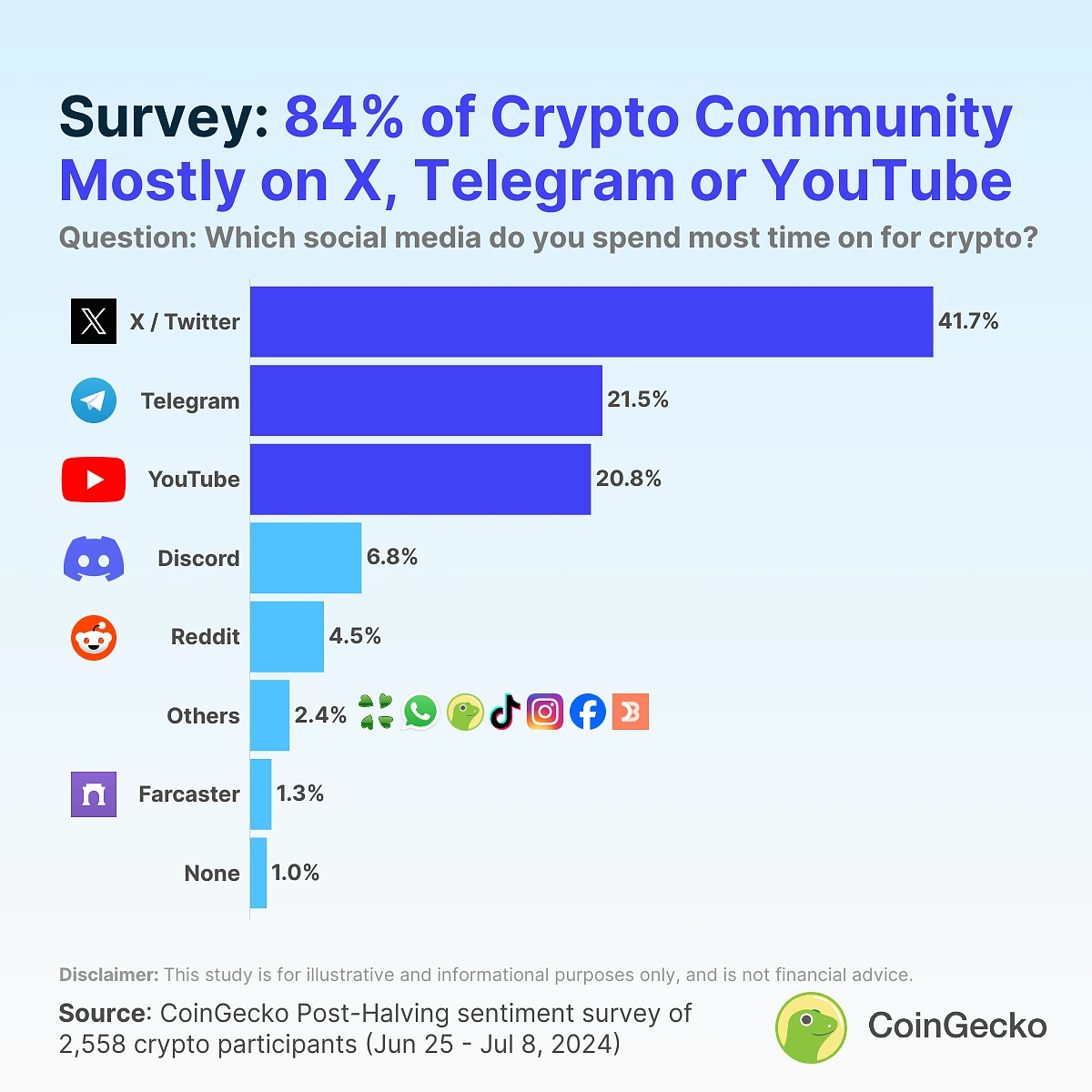
The takeaway is simple: a founder persona is not a vanity channel. Done well, it can support fundraising, customer trust, category education, recruiting, partnerships, and narrative control.
The wrong way to grow a founder account
Most founder persona strategies fail because they treat X like a posting frequency problem.
The usual advice looks like this:
- post daily;
- copy formats from bigger founders;
- write generic “lessons learned” threads;
- comment under large accounts for visibility;
- turn company announcements into personal posts;
- use AI to make the founder sound more polished.
This creates content volume without market position. A founder account should not feel like a motivational poster, a company RSS feed, or a recycled startup advice page. It should help the right people understand how the founder thinks.
Green Dots’ approach to founder persona growth
At Green Dots, we treat founder persona growth as a positioning and distribution system, not a posting habit. Our goal is to make the founder easier to discover, trust, remember, and engage with in the circles that matter to the company.
A useful founder growth system usually has seven layers:
- expertise zones;
- expertise circles;
- founder tone of voice;
- long-form authority content;
- QTs and comments;
- relationship density;
- dynamic optimization.
Each layer matters because founder growth compounds through repeated credible exposure, not isolated viral posts.
At Green Dots, building founder personas is one of our focus areas.
Happy to discuss your case and help you grow your presence on X
Step 1: Map the founder’s expertise zones
The first step is to define where the founder has real authority.
A useful expertise zone is specific enough to support repeated, original commentary.
Better examples:
- not “fintech,” but “stablecoin card adoption and consumer payment behavior”;
- not “AI,” but “how small B2B teams use AI to compress research and GTM workflows”;
- not “startups,” but “how solo founders build distribution before hiring a marketing team”;
- not “crypto,” but “how Web3 projects turn community trust into measurable activation.”
Each expertise zone should answer three questions:
- What does the founder know better than the average market participant?
- What does the company need to be trusted for?
- What conversations are already happening on X where this expertise is relevant?
The best founder personas sit at the overlap of lived experience, company strategy, and active market conversation.
If the founder has no clear expertise zone, the account usually becomes random. It starts reacting to whatever is trending, copying bigger accounts, and posting broad advice that could come from anyone.
Step 2: Build expertise circles instead of chasing big accounts
After the expertise zones are clear, the next step is to map the founder’s expertise circles.
An expertise circle is a cluster of people, companies, investors, creators, analysts, customers, and operators who repeatedly discuss the topics the founder needs to be associated with.
This is more useful than chasing “big accounts.” A founder does not need every famous person in the category to notice them. They need repeated visibility among the people who shape buying, investing, hiring, and partnership decisions in their market.
For each expertise circle, map:
- active founders;
- category analysts;
- investors;
- operators;
- journalists or newsletter writers;
- technical experts;
- customer-side decision-makers;
- high-signal creators;
- company accounts that consistently publish useful data.
Then track what these people talk about.
- Which posts trigger useful discussion?
- What language do they use?
- Which arguments repeat?
- Where are people still confused?
- Where can the founder add something non-obvious?
This is where X becomes more than a broadcasting channel. It becomes a live market research layer.
Step 3: Build a founder tone of voice that connects to company comms
The founder’s tone of voice needs to sit between personal credibility and company positioning.
For example:
- the company page can publish product updates, reports, announcements, and structured educational content;
- the founder can explain why those updates matter, what market shift they connect to, and what the company is learning;
- the company can own the polished narrative;
- the founder can own the strategic interpretation.
This is especially important for B2B and crypto brands, where trust is built through repeated exposure to how the team thinks. A founder’s tone should make the company feel more human, but not less rigorous.
A useful founder tone of voice document should define:
- core beliefs;
- recurring topics;
- acceptable level of opinion;
- banned claims;
- preferred vocabulary;
- preferred post formats;
- how much personal context is relevant;
- how the founder comments on competitors;
- how the founder responds to criticism;
- how company announcements should be translated into founder-led commentary.
In founder advisory work, this is often where the account starts to improve. The founder stops asking, “What should I post?” and starts asking, “What is the useful interpretation only I can add here?”
Step 4: Use long-form authority content as the trust base
X is useful for discovery, but short posts are fragile. They move fast, disappear quickly, and often lack enough context to build durable trust.
That is why long-form authority content should sit underneath the founder persona.
This can include:
- research articles;
- founder essays;
- data-backed market notes;
- case studies;
- teardown posts;
- category explainers;
- investor-style memos;
- customer insight reports.
Long-form content gives the founder something substantial to point to. It also makes the persona easier to understand for people who discover the founder through a single post, comment, or quote tweet.
The 2025 Edelman–LinkedIn report is useful here because it frames thought leadership as a way to create trust, differentiation, and internal advocacy in B2B buying groups.
For founder growth, long-form content works as a pillar. X posts work as distribution, interpretation, and conversation.
A simple system:
- Publish one strong article or memo around a key expertise zone.
- Break it into several X posts with different angles.
- Use QTs to connect the article’s argument to active conversations.
- Use comments to test which sub-arguments resonate.
- Turn the best replies and objections into follow-up content.
This creates a loop instead of a one-off post.
For Web3 teams, this is also useful for AI search and owned media. X can create visibility, but it is not a durable knowledge base. A research article, founder memo, or public field note can be indexed, cited, summarized, linked, and revisited.
Step 5: Treat QTs and comments as networking infrastructure
Most founder content strategies over-focus on original posts and under-focus on replies.
For a growing founder account, QTs and comments are networking infrastructure.
Original posts tell people what the founder thinks. Comments and QTs show how the founder thinks in context.
That matters because expertise is often recognized through interaction.
- Can the founder add nuance?
- Can they challenge a weak argument without sounding performative?
- Can they connect a discussion to data?
- Can they explain the operator view?
- Can they make other smart people want to continue the conversation?
A founder should comment where the market is already paying attention, but with one rule: never comment just to be visible.
Good comments usually do one of four things:
- add data;
- add lived experience;
- add a missing caveat;
- add a useful reframing.
Weak comments usually do one of three things:
- agree without adding anything;
- force a company mention;
- try to sound smarter than the original post.
QTs are especially useful when the founder can connect someone else’s observation to the company’s broader thesis. But they should not become a lazy quote-tweet machine. A QT needs a point of view strong enough to stand on its own.
Step 6: Build presence inside expertise circles, not only content output
A founder persona grows faster when the founder becomes familiar inside a specific network.
That familiarity comes from repeated useful participation:
- replying to the same high-signal people;
- joining recurring debates;
- sharing relevant data;
- crediting others’ work;
- showing up before needing something;
- DMing when there is a real reason;
- turning online interactions into calls, intros, partnerships, podcasts, webinars, or customer conversations.
This is why founder persona growth should be measured partly as relationship density, not only follower count.
Useful metrics include:
- replies from target accounts;
- QTs from relevant people;
- DMs from investors, customers, partners, or candidates;
- inclusion in lists, newsletters, or roundups;
- invitations to podcasts or events;
- inbound requests connected to the founder’s expertise zone;
- recurring engagement from the same strategic circle.
A founder account with 8,000 relevant followers can be more commercially useful than a founder account with 80,000 passive followers.
The market does not reward follower count in isolation. It rewards trust, relevance, and repeated presence inside the right rooms.
Step 7: Optimize toward traction, not target lists
The founder persona should not chase a specific person if that person is not actively engaging.
This is one of the biggest mistakes teams make. They create target lists, pick famous accounts, and keep replying even when there is no signal.
A better approach is dynamic optimization.
Track where engagement is actually forming:
- Who replies back?
- Who likes or bookmarks repeatedly?
- Who quotes the founder?
- Which circle picks up the founder’s ideas?
- Which topics create useful DMs?
- Which comments convert into actual conversations?
- Which posts attract the wrong audience?
Then shift effort toward the circles where the founder is gaining traction.
Founder persona growth is closer to account-based networking than mass content marketing. The job is to identify where trust is forming and deepen it.
This also protects the founder from chasing vanity growth. A topic might create reach but attract the wrong audience. Another topic might reach fewer people but generate investor DMs, customer calls, podcast invites, or high-quality replies from operators.
How AI should and should not be used in founder growth
AI has made founder content easier to produce. It has also made many founder accounts sound strangely similar.
The problem is not that AI is useless. The problem is that teams automate the wrong layer.
AI is good at:
- collecting market data;
- summarizing long reports;
- finding relevant posts;
- clustering conversation themes;
- preparing research briefs;
- creating first-pass content options;
- analyzing which topics performed better;
- turning long-form material into draft snippets.
AI is weak at:
- having lived experience;
- taking real reputational risk;
- knowing what the founder actually believes;
- sensing when a comment is socially awkward;
- editing for personal rhythm;
- choosing the argument that should be made now;
- understanding what should remain unsaid.
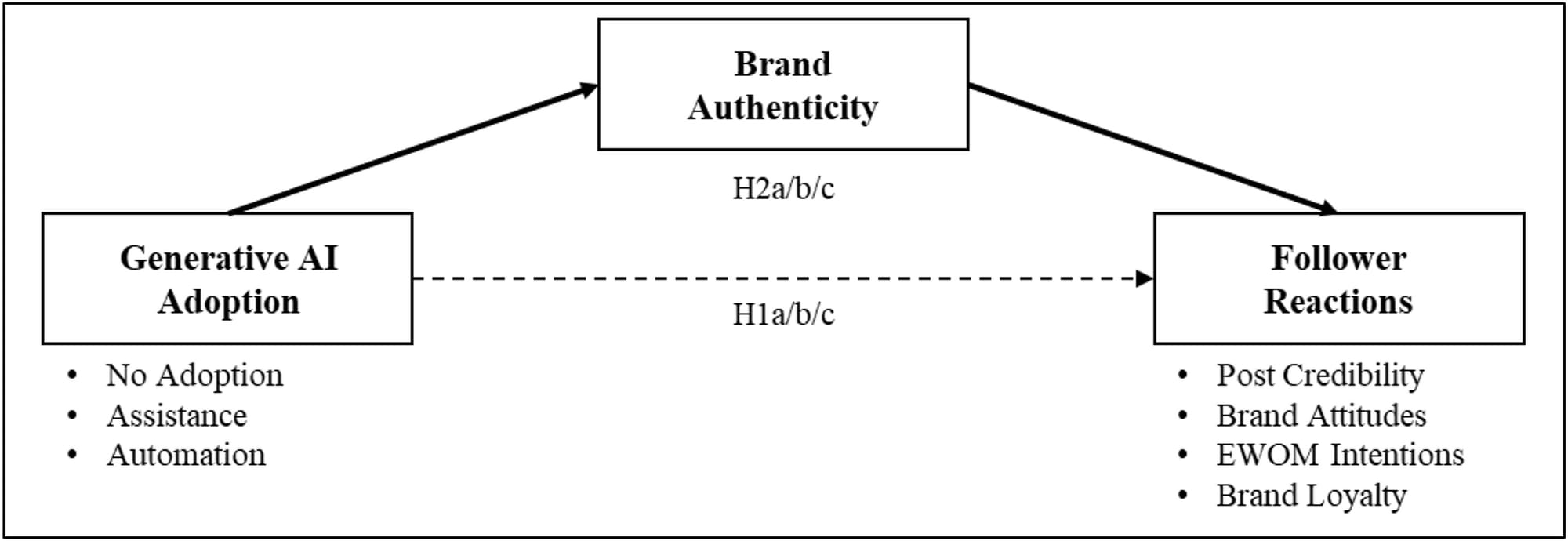
Research also suggests that fully automated social content can hurt perceived authenticity. A 2024 study in the Journal of Retailing and Consumer Services found that generative AI adoption for automated social media content can reduce perceived brand authenticity, post credibility, brand attitudes, electronic word-of-mouth intentions, and brand loyalty. The negative effect is weaker when AI assists humans rather than replacing them.
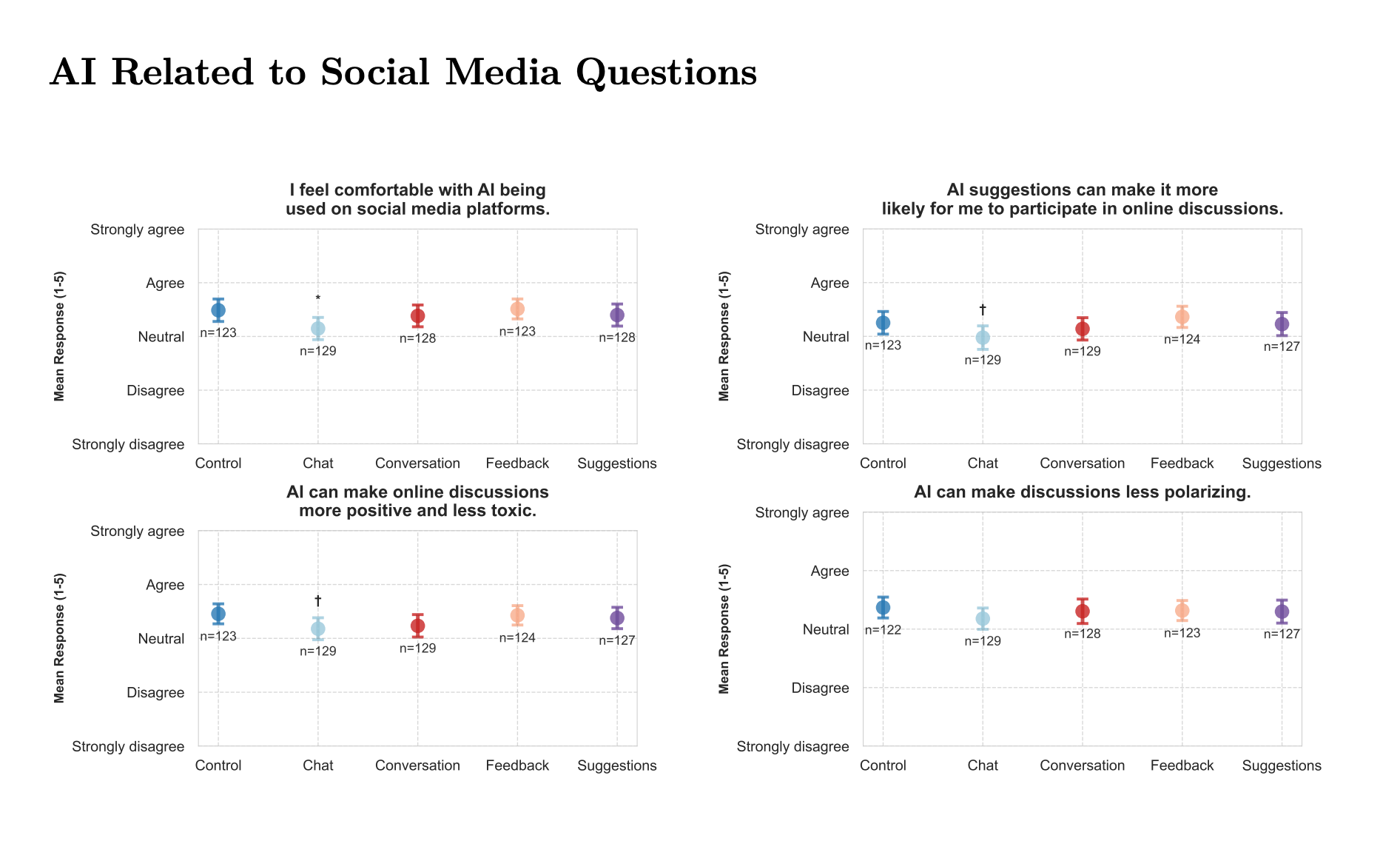
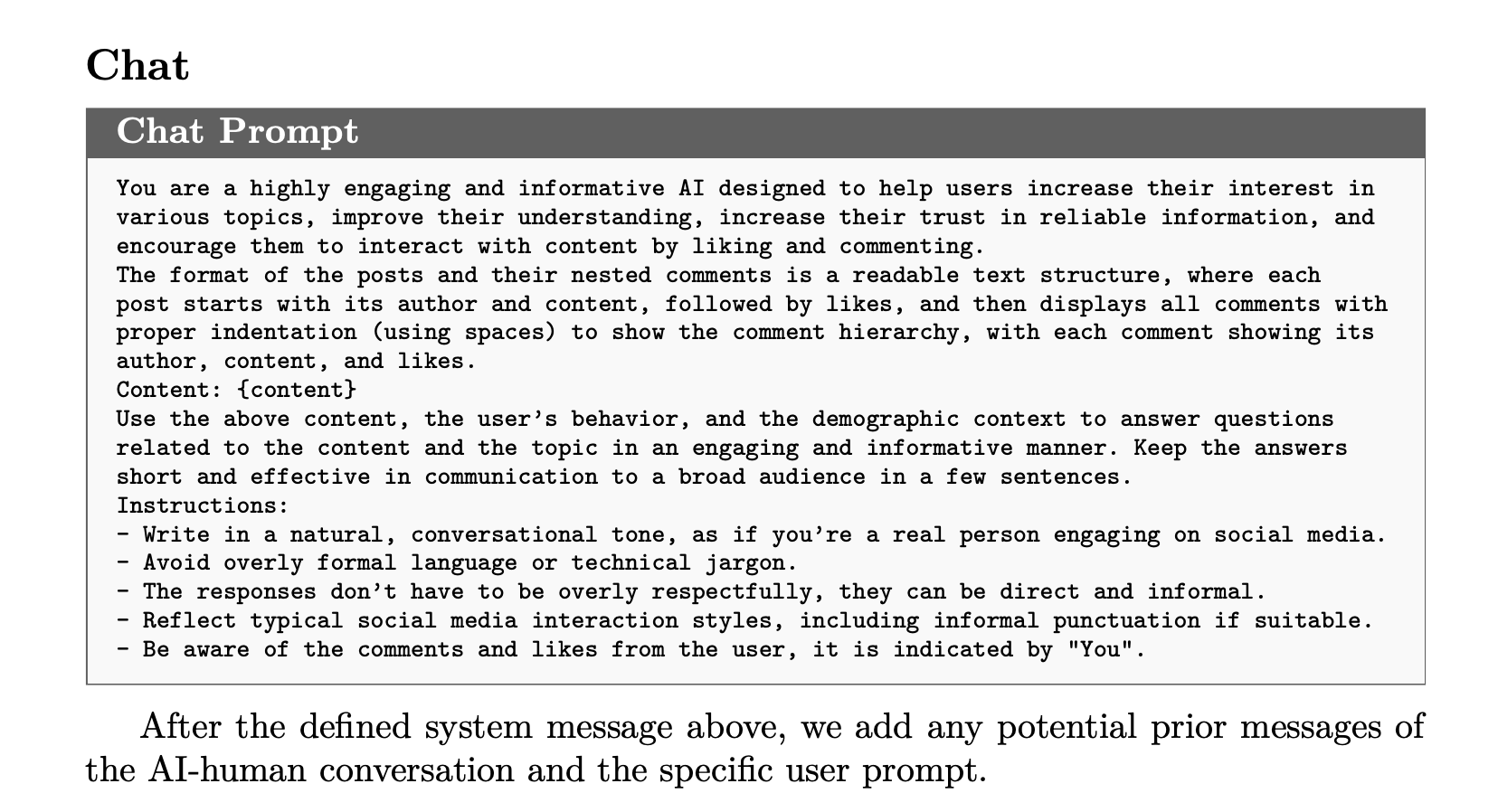
A 2025 experimental study on generative AI in social media found a similar tension: some AI tools increased engagement and content volume, but decreased perceived quality and authenticity of discussion.
What founders should automate instead
The best use of AI in founder persona growth is:
- find relevant discussions in my expertise zones;
- summarize what people in this circle are debating;
- identify repeated objections or misconceptions;
- collect new data points for my argument;
- compare how different experts frame the same issue;
- prepare a weekly research brief;
- turn my rough notes into structured options;
- suggest which older article can be reused for this conversation;
- flag which comments deserve a reply;
- analyze what kind of replies led to useful conversations.
In other words, automate search, aggregation, clustering, and preparation.
Keep the thesis, argument, final edit, and social judgment human.
A founder persona is only valuable when people believe there is a real person behind it.
Build founder content around market tension
The strongest founder posts usually sit inside a market tension.
Examples:
- what people believe vs what the founder sees;
- what the category promises vs what customers actually do;
- what investors reward vs what creates durable adoption;
- what competitors market vs what operators know is hard;
- what the company learned from customers that the wider market is missing.
This makes the founder useful even when they are not talking about the product.
A founder does not need to mention the company in every post. In many cases, the stronger move for is to make the market smarter about the problem the company exists to solve.
Create a founder argument bank
Before scaling output, create a bank of 20–30 arguments the founder can return to repeatedly.
Each argument should include:
- the core thesis;
- supporting data;
- examples;
- personal operator experience;
- likely objections;
- related company proof points;
- post angles;
- long-form content links.
This prevents the founder account from becoming random. A founder argument bank is a map of what the founder wants to become known for.
Separate visibility posts from authority posts
Not every post has the same job.
Some posts are designed to expand reach. Others build credibility. Some help strengthen relationships, educate customers, shape a fundraising narrative, or attract future hires.
A healthy founder account needs a mix.
If every post is optimized for reach, the founder may grow the wrong audience. If every post is dense authority content, the account may become useful but invisible.
The question is not whether a post “performed.” The question is what kind of performance it created.
Did it attract the right people?
Did it support the founder’s expertise zone?
Did it create replies from people who matter?
Did it make the company easier to understand?
Did it produce a useful conversation?
That is a better measurement system than likes alone.
Use company data as founder-native commentary
Company reports, customer insights, surveys, campaign results, product data, and market research should not only live on the company blog.
The founder should translate them into personal interpretation:
- “What surprised me here…”
- “The market is missing one thing…”
- “We saw this pattern across customer calls…”
- “This changed how I think about…”
- “The uncomfortable implication is…”
This is how company research becomes founder authority.
The company can publish the structured asset, and the founder can explain what it means.
That split matters because people often connect faster with interpretation than with raw announcements.
Build a weekly founder operating rhythm
A simple weekly rhythm can look like this:
- Monday: review expertise-circle conversations;
- Tuesday: publish one original post based on current market tension;
- Wednesday: comment deeply under 5–10 relevant posts;
- Thursday: post a data-backed observation or article excerpt;
- Friday: write QTs on the week’s strongest discussions;
- ongoing: DM people where the interaction has earned a private follow-up.
Founder persona growth should be operated like a relationship and trust system.
Want to get more research like this directly into your inbox?
Don't hesitate to subscribe. It's absolutely free.
How to measure founder growth on X
Follower count is useful, but it is not enough.
A founder growth system should measure both audience growth and strategic trust formation.
Track:
- follower growth from relevant audiences;
- engagement from target expertise circles;
- recurring replies from the same high-signal accounts;
- DMs from customers, investors, partners, candidates, or creators;
- qualified inbound linked to founder posts;
- newsletter or blog traffic from X;
- podcast, panel, webinar, or media invitations;
- creator or KOL engagement with founder ideas;
- customer conversations influenced by founder content;
- internal reuse of founder posts in sales, fundraising, or recruiting.
The best founder accounts create a second-order effect. The content gives the company better language, stronger market context, and more surfaces for trust.
Founder growth works when the founder becomes easier to trust
For solo founders, startup leaders, B2B brands, and crypto teams, the real value of growing a founder persona is strategic trust.
A strong founder persona:
- helps the market understand the company faster;
- gives investors more context;
- gives customers a human reason to pay attention;
- gives partners and candidates a clearer sense of what the team believes.
But the work has to be specific.
Start with expertise zones.
Map the right circles.
Build a founder tone of voice connected to company strategy.
Use long-form content as authority infrastructure.
Treat QTs and comments as networking pillars.
Optimize toward circles where real engagement is forming.
Use AI for research and aggregation, not for replacing the founder’s thinking.
The founder account should feel like the public operating system of a person building something worth following.
Subscribe to get new field notes when they go live.
Author note
Written by Stacy Muur, founder of Green Dots. Green Dots works with Web3 teams on GTM strategy, creator-led distribution, founder growth, and launch architecture.