
Web3 Marketing in 2027: Adapting to bear market budgets
Web3 marketing in 2027 will move from paid shilling to proof-driven distribution: referral deals, creator trust, contextual inclusion, AI search visibility, and campaigns people have a reason to repeat.
Web3 marketing in 2027 will likely be shaped by one constraint: teams still need growth, but they will have less room to waste budget.
That shifts the marketing brief.
The focus moves beyond generating attention toward understanding whether that attention can turn into trust, activation, retention, and discoverable proof.
In 2026, crypto already moved into a more defensive operating mode. Galaxy reported that VCs deployed roughly $4B into crypto and blockchain startups across 355 deals in Q1 2026, with capital invested down about 50% quarter-over-quarter. The same report described the quarter as cooler than the late-2025 spike, although still healthier than some earlier downturn periods.
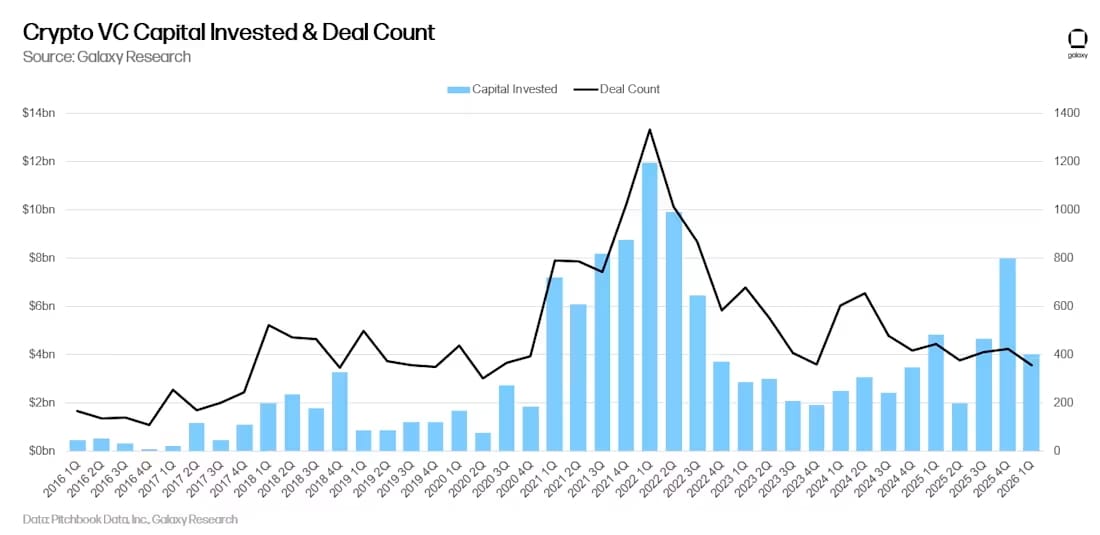
This means money is more selective than it used to be. Capital is concentrated. Budgets are scrutinised. Founders are asking marketers to prove efficiency faster.
For Web3 marketing teams, that creates a different planning environment:
- budgets shift from broad visibility to measurable acquisition;
- KOL marketing gets judged by activation, not only views;
- referral, affiliate, CPA, and revenue-share deals become more attractive;
- brand awareness becomes harder to justify, even though performance channels still need it;
- AI search becomes a real discovery surface, but most teams will optimise the wrong layer;
- creative campaigns matter more because generic campaigns are easier to ignore.
My read: 2027 Web3 marketing will be less about buying attention and more about earning believable context.
Want to get more research like this directly into your inbox?
Don't hesitate to subscribe. It's absolutely free.
What proof-driven distribution means
Proof-driven distribution means the product is discovered through credible signals around the market, not only through brand-owned claims or paid promotional posts.
In Web3, that proof can come from:
- creator explanations;
- referral partners;
- comparison pages;
- community discussions;
- Reddit threads;
- YouTube reviews;
- founder interviews;
- product demos;
- transparent fee pages;
- audits and security documentation;
- third-party rankings;
- category reports;
- ecosystem maps;
- AI-searchable mentions.
This matters because Web3 products usually ask users to take high-trust actions: connect a wallet, deposit funds, trade, bridge assets, mint, stake, subscribe, or adopt a technical product they may not fully understand.
A paid post can create reach, while trust depends on the context the market has around the product. In our work with Web3 teams, campaigns often break down when teams buy visibility before that context is strong enough.
The market outlook: Web3 enters an efficiency cycle
During bull cycles, crypto marketing often over-indexes on velocity: Launch fast; Buy attention; Push narratives; Flood feeds; Optimise later.
In a tighter market, this model becomes harder to defend. High-budget awareness campaigns are difficult to justify when token prices are weaker, VC appetite is more selective, and growth teams are asked to show acquisition efficiency quickly.
I expect 2027 Web3 marketing to be defined by three shifts:
- More budget moves from fixed-fee exposure to performance-linked deals.
- More teams look for formats that create trust, not only impressions.
- More distribution strategies treat third-party validation as infrastructure for both human discovery and AI discovery.
That validation can include creator mentions, community discussions, comparison pages, Reddit threads, YouTube reviews, LinkedIn posts, industry media, and category reports.
This pattern is already visible outside crypto.
IAB’s 2026 Outlook Study frames media buyers as recalibrating growth strategies around AI adoption, changing consumer behaviour, and performance pressure. HubSpot’s 2026 State of Marketing also centres AI, brand point of view, trust, and efficiency as major marketing themes.
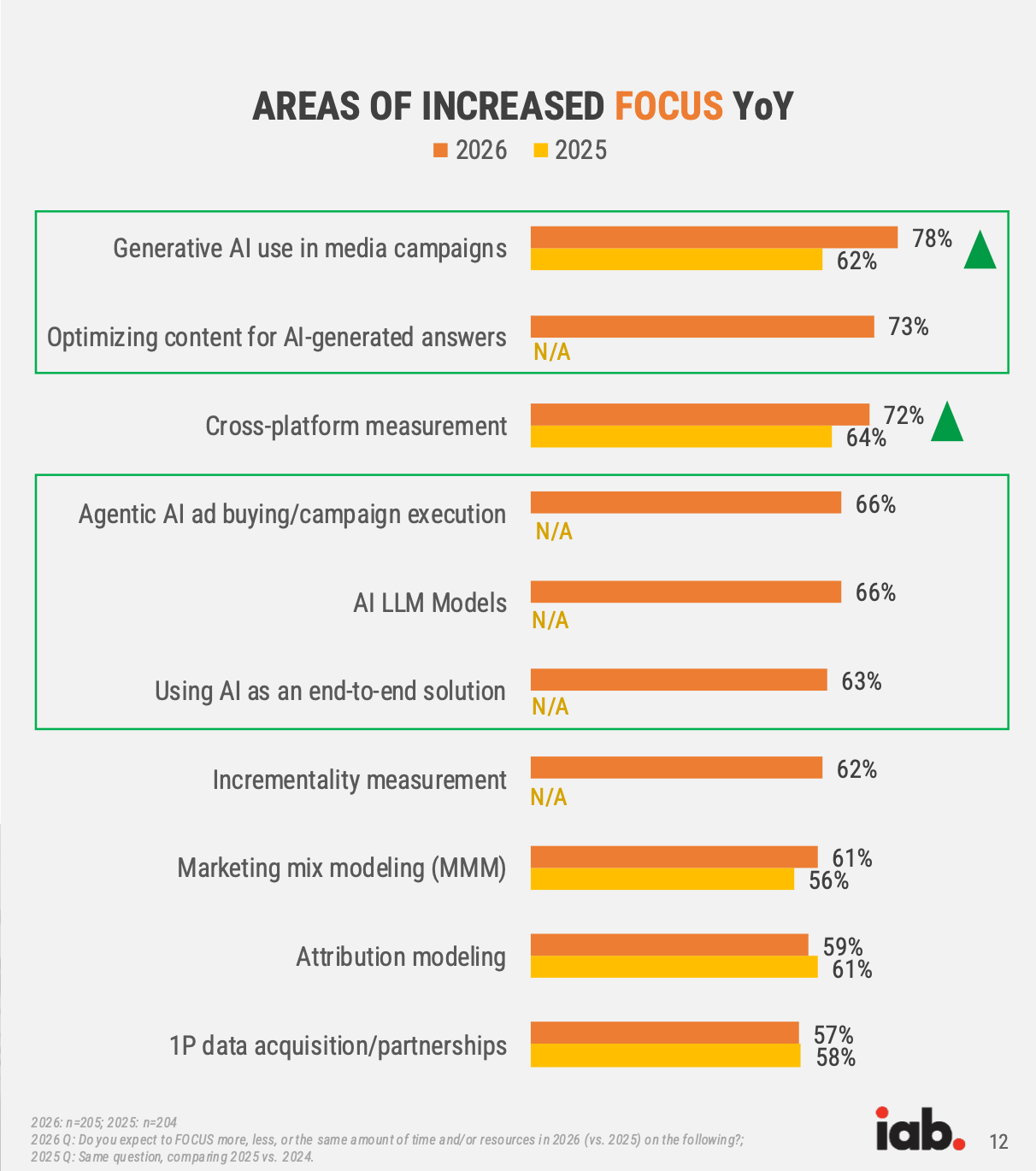
For Web3, the same logic applies with more pressure.
Crypto teams do not only need attention. They need attention that can survive scepticism.
1. Referral deals will grow, but KOL pitching will get harder
More Web3 teams will push referral, affiliate, CPA, and revenue-share deals in 2027 because the economics are easier to defend in a limited-budget market.
A fixed KOL post can burn budget before the team knows whether the audience converts, but a referral deal moves part of the risk to performance. The KOL gets paid when users sign up, deposit, trade, mint, subscribe, or generate revenue.
For Web3 teams, referral deals create a cleaner acquisition story:
- the team pays when there is action;
- the creator has more incentive to explain the product properly;
- the campaign can continue after the first post;
- the same KOL can be benchmarked against their own historical performance;
- the brand can separate awareness creators from acquisition creators.
But there is one problem many teams underestimate; most good KOLs already have referral deals.
Strong creators compare your offer with every other long-term offer already in their pipeline.
If a KOL already has a working referral deal with an exchange, wallet, casino, card, trading tool, or infrastructure brand, switching is expensive. They risk confusing their audience, losing predictable monthly income, and damaging trust if they suddenly promote a weaker product.
This shifts the question from simply offering a referral deal to understanding whether the deal is compelling enough for the KOL to replace or add another long-term partner.
That usually requires at least one of these:
- stronger payout;
- better user offer;
- obvious product-audience fit;
- credible brand the creator is comfortable attaching their name to;
- hybrid structure: smaller fixed fee plus referral upside;
- performance bonus if later activations beat the first one;
- clear creator landing page, tracking, dashboard, and payout cadence.
2. Weak brand awareness will hurt referral campaigns
Referral deals are often treated as a performance tacticб but they still depend on brand trust.
If a KOL has never heard of your brand, they are less likely to accept a pure referral deal. If their audience has never heard of you, conversion will be weaker. If the product category is sensitive – trading, cards, wallets, DeFi, custody, stablecoins, payments – unfamiliarity becomes a conversion tax.
This is where many Web3 teams get trapped. They cut awareness spend because the market is tight. Then they push referral deals because they need efficient growth. But referral deals convert worse because there is no awareness layer supporting them.
A creator can explain what a product does. They cannot fully compensate for a missing trust base.
The audience still asks:
- Is this brand real?
- Have I seen it before?
- Do other people use it?
- Is anyone outside this paid post talking about it?
- Can I find reviews, comparisons, community feedback, or trusted third-party references?
This is also becoming more important for AI search. Search Engine Land reported on Peec AI analysis finding Reddit, YouTube, and LinkedIn among the most cited domains in AI-generated answers across major AI search products.
For Web3 teams, the practical implication is simple: referral campaigns need a credibility layer before they can scale.
That does not always mean expensive brand campaigns.
It can mean:
- relevant creator mentions before the referral launch;
- third-party discussions;
- comparison posts;
- expert explainers;
- category reports;
- founder interviews;
- community AMAs;
- long-term creator education;
- proof pages with transparent fees, audits, integrations, or traction.
3. Contextual inclusion will keep replacing classic paid shilling
Classic paid shilling is becoming less efficient.
The format is too recognisable. The audience is sceptical. Many KOLs overcharge for one-off exposure. When every post sounds like “excited to partner with,” the marginal trust created by another paid post is low.
This is why contextual inclusion campaigns will keep growing.
The idea is simple: instead of paying for isolated promotional posts, brands pay to be included in a relevant context where the audience is already trying to understand the market.
Examples:
- A crypto card brand is included in a “best cards for EU users” comparison.
- A wallet is mentioned in a security checklist for new DeFi users.
- A payment app appears in a creator’s breakdown of stablecoin off-ramp options.
- A trading tool is featured in a “how I track perp markets” workflow.
- A founder appears in an expert thread about a regulatory or market shift.
- A protocol is included in a neutral ecosystem map or category report.
- A product is mentioned inside a broader educational post, not as the main character.
This works better because the mention is attached to a user problem.
The audience sees “this product belongs in the consideration set for this specific use case”, which works better.
That makes contextual inclusion useful for:
- trust building;
- category education;
- brand awareness;
- AI visibility;
- KOL relationship warming;
- referral deal pre-heating;
- search demand creation;
- comparison-led acquisition.
This direction also mirrors broader creator marketing. Creator partnerships are moving from simple sponsorships toward deeper creator-brand systems, with more attention on creative fit, trust, and performance.
4. Web3 teams will optimise for AI search, but most will optimise the wrong layer
In 2027, more Web3 teams will ask:
“How do we appear in ChatGPT, Perplexity, Gemini, Claude, Google AI Overviews, and AI Mode?”
Most will start by publishing more blog articles, and that is useful, but incomplete.
AI systems do not only rely on what a brand says about itself. They also use what third-party sources say about the brand. That includes Reddit, YouTube, LinkedIn, review platforms, comparison sites, media, databases, and community discussions.
A crypto brand can publish 50 blog posts and still be invisible in AI recommendations if no one else is talking about it in credible, indexable, third-party environments.
A stronger Web3 AI visibility strategy has six layers:
| Layer | What it includes |
|---|---|
| Owned structured content | Product pages, docs, fees, use cases, FAQs, comparisons, changelogs, integrations, category pages. |
| Third-party mentions | Creator posts, expert breakdowns, media, research reports, rankings, ecosystem maps. |
| Community proof | Reddit threads, X discussions, forum posts, Telegram or Discord recaps that can be indexed or referenced elsewhere. |
| Video proof | YouTube explainers, tutorials, reviews, demos, walkthroughs. |
| Comparison presence | “Best X for Y” pages, alternatives pages, review databases, ecosystem lists. |
| Freshness and consistency | Updated information, consistent product naming, clear positioning, repeated mentions across credible sources. |
This also changes how teams should think about KOL campaigns.
A KOL post is not only a one-day reach asset. It can become part of the brand’s discoverability layer if it creates searchable, quotable, indexable proof around the product.
5. Creative campaigns will become the new filter
When budgets are limited, marketers get pushed toward faster results.
But the obvious channels are crowded. Ads are more automated. AI tools make production cheaper. Performance benchmarks are harder to beat. Users have seen too many generic campaigns.
That makes distribution more important, not less.
A strong campaign gives KOLs something better to talk about. It gives communities a reason to discuss the product. It gives media a clearer angle. It gives AI systems more third-party context. It gives users a reason to remember the brand.
Most importantly, it reduces the need to buy every impression from zero.
For Web3 teams, creative campaigns can include:
- public benchmarks or leaderboards;
- challenges with real product utility;
- creator-led experiments;
- transparent fee comparisons;
- community research sprints;
- product teardown series;
- founder-led build-in-public narratives;
- category reports with partner distribution;
- referral campaigns with public milestones and creator bonuses;
- campaigns built around user proof, not token hype.
What Web2 and fintech marketers are already seeing
The broader market gives useful signals because consumer behaviour, AI search, creator trust, and budget pressure are not crypto-specific.
There are five areas I would watch closely.
1. AI is becoming a marketing operating layer
AI is moving from content assistant to planning, testing, personalisation, reporting, and media optimisation.
For Web3 teams, the focus is moving from whether to use AI tools, since most teams will adopt them in some form. The real challenge is understanding where AI can improve speed without making the brand sound generic.
Areas to watch:
- AI-assisted creative testing;
- AI media buying;
- AI-generated landing page variants;
- AI sales and community agents;
- AI search visibility;
- AI-assisted creator matching;
- AI reporting and attribution.
2. Creator marketing is becoming performance infrastructure
Creators are no longer only awareness channels. They are becoming distribution partners, affiliates, educators, trust nodes, and content production systems.
For Web3, this supports a shift from one-off KOL buys to creator portfolios.
A stronger creator portfolio may include:
- awareness creators;
- narrative creators;
- referral creators;
- technical explainers;
- community-native creators;
- comparison and review creators;
- founder-led creators.
This changes the approach to KOL selection. The key criterion becomes the creator’s relevant level of trust in the context of a specific product, audience, and campaign stage.
3. Third-party validation is becoming more important than owned claims
Users trust peer discussion, comparison content, expert opinions, and reviews more than brand claims.
In crypto, this matters even more because users already assume risk.
A wallet, exchange, DeFi app, or crypto card cannot rely only on its own claims. The user wants to see what the market says around the product.
Web3 teams should invest more attention into:
- Reddit visibility;
- YouTube reviews;
- comparison pages;
- community sentiment;
- review platforms;
- third-party rankings;
- earned media;
- founder credibility;
- security and transparency proof.
The practical question is: If a user searches for your category, does your brand appear in credible third-party contexts – or only on your own website?
4. Search is shifting from keywords to answer ecosystems
Traditional SEO still matters.
But AI search changes the job.
It requires:
- clear product information;
- structured pages;
- consistent naming;
- updated docs;
- third-party mentions;
- community proof;
- comparison inclusion;
- positive sentiment around specific use cases.
Many crypto brands still have poor documentation, unclear pricing, weak comparison presence, and scattered community narratives. That creates room for teams that treat content as infrastructure, not decoration.
5. Creative strategy is becoming a performance advantage
As AI makes production cheaper, generic content becomes less valuable.
The advantage moves to concept, taste, speed, and distribution design.
For Web3, this matters because attention is cyclical and narrative-driven. The market rewards teams that can turn technical products into simple, repeatable stories.
Teams should research:
- founder-led campaigns;
- narrative design;
- community-led launches;
- interactive campaigns;
- public experiments;
- data-led reports;
- creator-native content formats;
- meme mechanics without empty hype;
- product-led storytelling.
A creative campaign works when the market can repeat it without needing the brand to explain it every time.
The practical 2027 Web3 marketing stack
The strongest Web3 marketing teams in 2027 will likely combine six layers.
| Layer | What it includes | Goal |
|---|---|---|
| Performance base | Referral deals, CPA deals, affiliate programs, creator revenue-share, bonus structures. | Acquire users with controlled CAC. |
| Trust base | Third-party mentions, comparison pages, credible creators, community discussions, audits, transparent metrics, public product information. | Make users and KOLs comfortable converting. |
| Contextual inclusion | Mentions inside relevant creator posts, reports, rankings, explainers, ecosystem maps, user workflows. | Build awareness without obvious paid shilling. |
| AI visibility | Owned structured content plus off-site validation across Reddit, YouTube, LinkedIn, X, media, reviews, and comparison sources. | Appear in AI-generated recommendations and category answers. |
| Creative campaigns | Campaigns with a strong enough idea that creators, users, and communities have a reason to repeat them. | Reduce dependency on paid impressions. |
| Measurement discipline | Self-benchmarking KOLs, separating awareness and acquisition creators, tracking post-view conversion windows, measuring assisted conversions. | Keep what compounds and stop what only creates noise. |
What Web3 teams should do differently in 2027
- The 2027 Web3 marketing playbook will not be “spend less.” It will be “spend with more proof.”
- Referral deals will grow, but only credible brands with strong offers will win good KOLs.
- Brand awareness will be harder to fund, but more important for conversion.
- Paid shilling will lose efficiency, while contextual inclusion will become more valuable.
- AI search optimisation will push teams beyond blog articles into third-party attestation.
- Creative campaigns will become the filter between teams that simply buy reach and teams that build market memory.
- In a tight market, attention is not enough. The real advantage is believable distribution.
Subscribe to get new Green Dots Research field notes when they go live.
Author note
Written by Stacy Muur, founder of Green Dots. Green Dots works with Web3 teams on GTM strategy, creator-led distribution, founder growth, and launch architecture.